Bronx Post Newsroom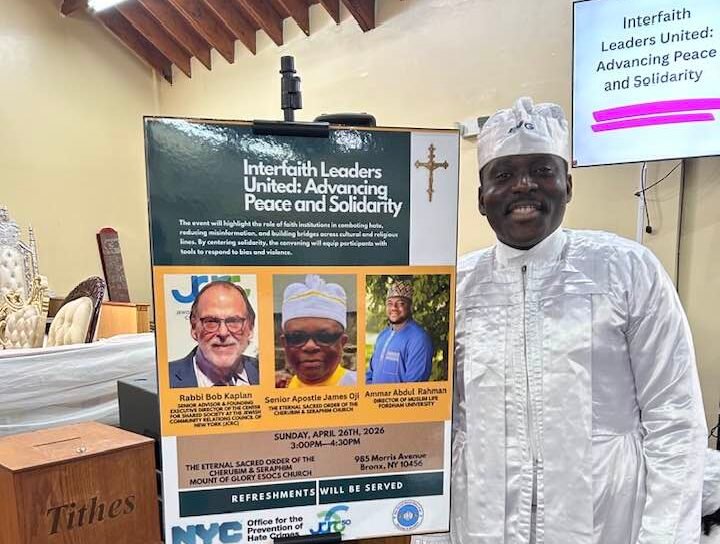
An interfaith gathering held on Sunday, April 26, 2026, at the Eternal Sacred Order of the Cherubim and Seraphim Mount of Glory ESOCS Church located at 935 Morris Avenue in the Bronx borough brought religious leaders and community partners together around a shared goal: advancing peace, dignity, and solidarity across faith lines.
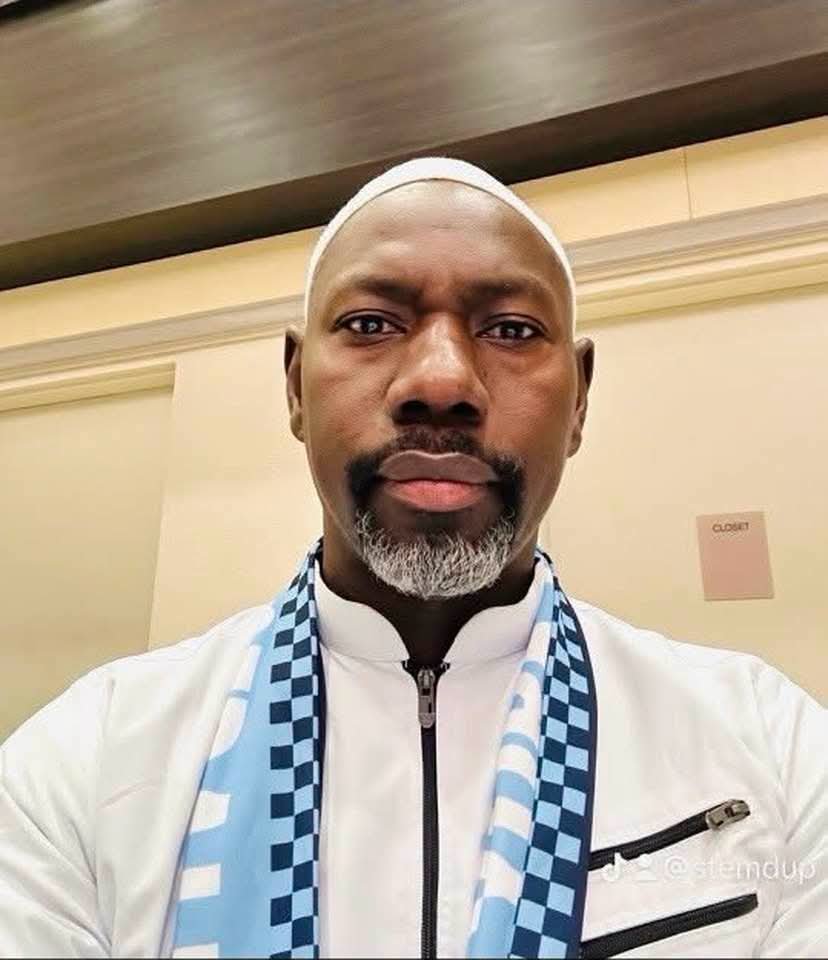
The event, titled “Interfaith Leaders United: Advancing Peace and Solidarity,” featured three key interfaith voices: Rabbi Bob Kaplan, Senior Apostle James Oji, and Ammir Abdul Rahman.
According to Rabbi Bob Kaplan, the panel focused on how faith shapes human conduct and how communities can work together to confront hate with dignity and mutual respect.
“Interfaith panel at the Mount of Glory Eternal Sacred Order of the Cherubim and Seraphim Church in the Bronx sharing on how our faith impacts on us and how can we lend dignity to one another to defeat hate,” Rabbi Kaplan said.
The program was organized by Christelle Onwu, an alumna of the JCRC BridgesNY Fellowship.


The significance of the event lies in its timing and message. At a moment when public life is often marked by mistrust, polarization, and identity-based tensions, the panel offered a different vision: one in which faith communities use their moral authority not to divide, but to heal, listen, and protect one another’s humanity.
The Bronx remains a fitting home for such a conversation. Its neighborhoods are shaped by religious diversity, immigrant experience, and strong traditions of grassroots resilience. In that context, bringing Jewish, Christian, and Muslim voices together under one roof sends a powerful local message that coexistence must be cultivated deliberately, not assumed.
The event also showed that the fight against hate is not only a matter of law enforcement or public policy. It is also a matter of culture, conscience, and daily human conduct. When faith leaders model respect across difference, they help communities imagine a stronger civic ethic grounded in empathy and shared responsibility.
In that sense, the panel was more than a discussion. It was a practical act of bridge-building in a borough that continues to show how diversity, when guided by dignity, can become a source of strength rather than division.