Newsroom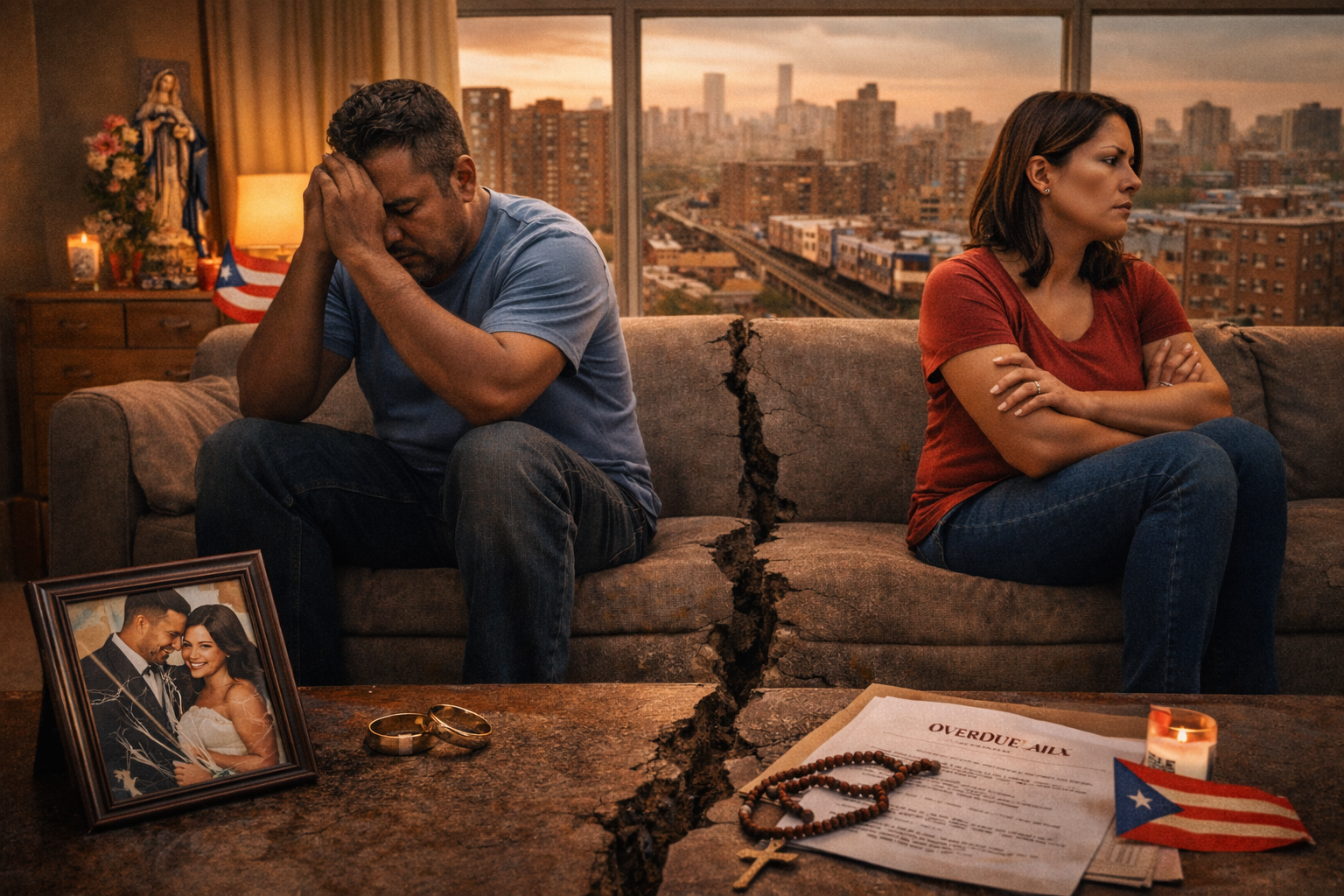
By Mutiu Olawuyi
Chief Editor, Bronx Post
A Borough Where Marriages Fade, Not Explode
In the Bronx, marriages rarely end with spectacle.
They do not typically unravel through public scandal, dramatic confrontations, or viral exposure. Instead, they erode quietly—inside overworked households, between partners navigating economic pressure, immigration stress, and competing responsibilities. They fade in apartments where exhaustion replaces conversation, and where children learn to sense emotional distance long before adults acknowledge it.

This quiet erosion is not accidental. It is structural. And it is costing Bronx families more than we are prepared to confront.
When Survival Replaces Intimacy
The Bronx is a borough built on resilience. Survival is not optional here; it is a daily discipline. Housing insecurity, long work hours, immigration uncertainty, and rising living costs dominate family life. Under such conditions, marriage is often reduced to coordination rather than connection. Couples manage schedules, bills, childcare, and obligations efficiently—but rarely pause to nurture intimacy.
As a result, many marriages transition subtly from relationships into systems. Love may still exist, but space for emotional presence disappears. Conversations become functional. Conflict is postponed indefinitely. Intimacy is replaced by endurance.
The Comforting Narrative We Tell Ourselves
To cope, we adopt familiar reassurances:
“At least we’re still together.”
“At least the children have both parents.”
“At least no one cheated.”
“At least we’re managing.”
These statements offer temporary comfort, but they also normalize emotional vacancy. Managing is not the same as thriving. Staying together is not synonymous with loving well. Silence is not peace—it is often deferred conflict.
In many Bronx households, unresolved tension does not vanish. It is simply buried, where it resurfaces later in more damaging forms.
Children Absorb What Adults Avoid
Children in the Bronx are perceptive. They notice changes adults believe are hidden.
They recognize when laughter disappears, when questions are avoided, when one parent speaks while the other withdraws. They learn when “calm” actually signals emotional distance. Over time, they adapt—becoming quieter, more responsible, more attuned to adult moods.
This adaptation is frequently praised as maturity. In reality, it is often a response to chronic emotional uncertainty. What children internalize during these years shapes how they later understand love, conflict, and safety.
Faith as Support—and as Silence
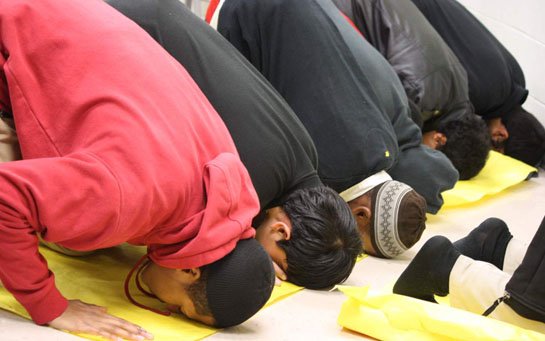
Faith communities are central to Bronx life. Churches, mosques, and temples provide moral grounding, communal support, and resilience in the face of hardship.
However, faith becomes counterproductive when it substitutes endurance for honesty. When patience is emphasized without communication, when suffering is spiritualized without addressing harm, and when prayer replaces accountability, faith shifts from guidance to suppression.
Authentic faith should promote repair, dignity, and mutual responsibility—not emotional anesthesia.
The Emotional Weight Carried by Bronx Men
Bronx men carry immense pressure, often without language to express it.
Many equate love with sacrifice—long hours, financial provision, physical presence. Emotional vulnerability, however, is rarely modeled or encouraged. As a result, men may retreat emotionally not from indifference, but from fear of inadequacy.
This absence is frequently misinterpreted as neglect. In truth, it often reflects a lack of tools, not a lack of care. Emotional presence is a learned skill—and many men were never taught how to practice it safely.
The Cost of Endurance for Bronx Women
Bronx women are widely celebrated for resilience. Yet resilience, when expected indefinitely, becomes exploitation.
Women frequently shoulder emotional labor, caregiving, and relational maintenance while suppressing loneliness and unmet needs. Over time, patience is mistaken for virtue, and silence is mistaken for strength.
Endurance should never require self-erasure. When it does, marriage ceases to be a partnership and becomes a burden carried unevenly.
This Is Not an Argument Against Marriage
This is not a call to abandon marriage, nor a defense of divorce as a default solution.
Some marriages should endure. Some should end. What matters is not the outcome, but the honesty with which couples confront their reality.
Divorce is not the only harm. Emotionally vacant marriages also leave lasting consequences—particularly for children. Longevity without intimacy is not success. Stability without safety is not peace.
What the Bronx Actually Needs
The Bronx does not need more moral slogans about marriage. It needs practical education that reflects lived reality.
We must begin teaching (1) how to argue without frightening children, (2) how to listen without defensiveness, (3) how power operates within relationships, (4) how to repair harm without humiliation, and (5) how to remain committed without disappearing.
Marriage is not sustained by intention alone. It is sustained by skill. And skills can be taught.
The Question Before Us
The Bronx values family. That has never been in doubt.
The question is whether we are prepared to speak honestly about what marriage requires in a borough shaped by pressure, resilience, and sacrifice.
Silence is not peace.
Endurance is not intimacy.
Survival alone is not a vision for love.
If we are serious about strengthening Bronx families, we must replace comforting myths with honest conversations—at home, in faith spaces, and in public discourse.
Marriage does not need perfection.
It needs truth.
About Author
Mutiu Olawuyi is the Chief Editor of the Bronx Post, CEO of Parrot Media Corporation (New York), creative writer. restorative realist, and a community-based writer examining family life, faith, power, and emotional resilience in New York City and beyond. To order a copy of his book globally trending book on marriage and divorce, click this link below.
https://www.amazon.com/Marriage-Ledger-Mutiu-Olawuyi/dp/2487017139

 Sheikh Musa Drammeh