Bronx Post Newsroom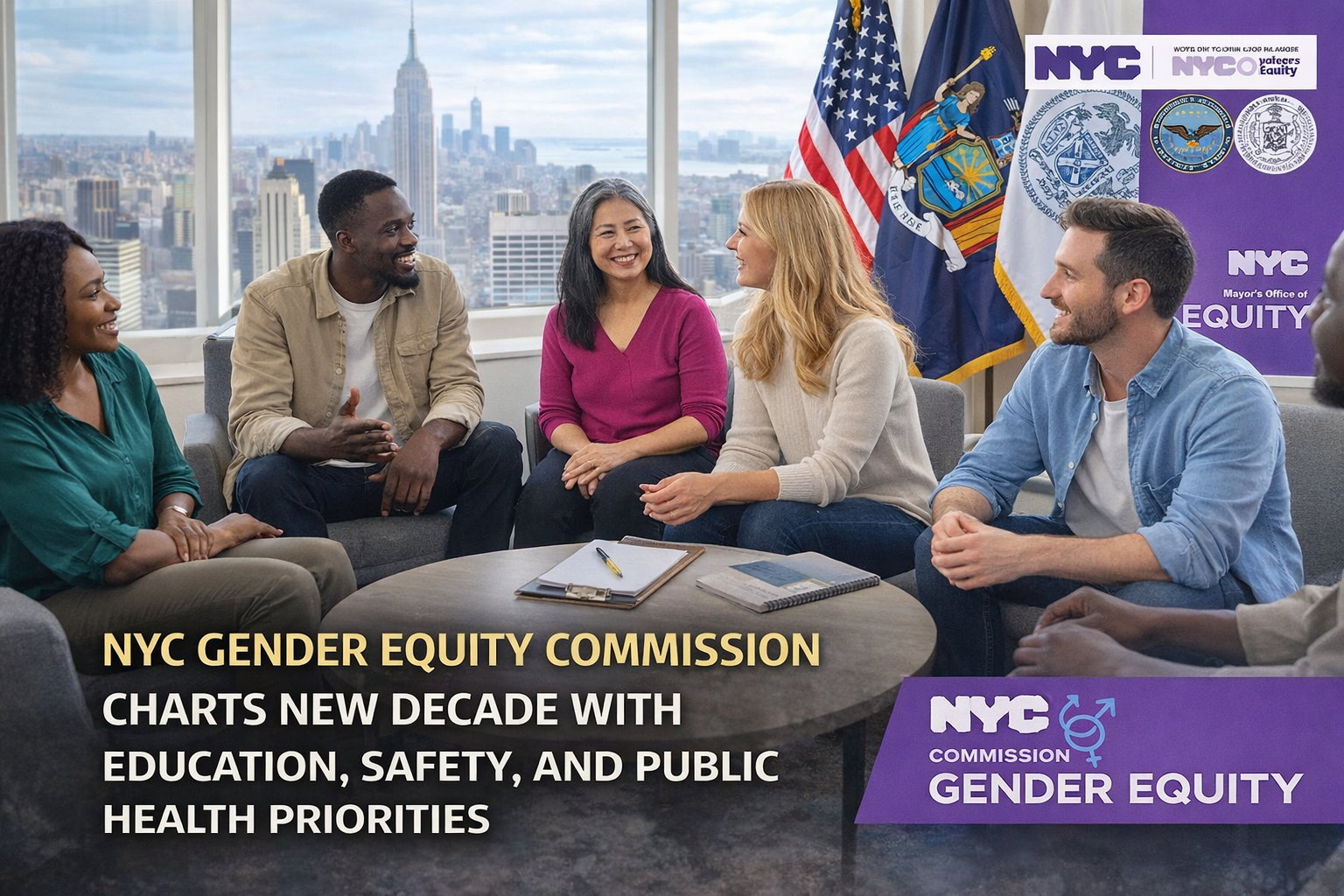
As the NYC Commission on Gender Equity (CGE) marks its 10th anniversary, city leaders are outlining a new roadmap aimed at deepening public education, strengthening interagency coordination, and expanding community-based efforts to make New York safer and fairer for women, girls, and gender-diverse residents.
The updated agenda includes plans to release revised recommendations from the Sexual Health Education Task Force, broaden public education campaigns, and increase access to bystander intervention trainings and gender equity workshops across the city. It also calls for a new strategic plan that will shape the commission’s next decade of work on safety, health, and opportunity.
According to city materials, the commission also plans to intensify collaboration across agencies and provide technical support to help embed gender equity into city policy and program design. That effort is expected to reach issues ranging from public safety and reproductive justice to economic mobility and service delivery. The commission’s public-facing priorities also include resource fairs, street harassment awareness campaigns, and menstrual equity initiatives intended to connect policy with daily life in neighborhoods across the five boroughs.
The CGE, established in 2015 and formally codified in the New York City Charter in 2016, was created to help institutionalize equity across city government. Its work has focused on the barriers affecting girls, women, intersex, transgender, nonbinary, and gender-nonconforming New Yorkers across a wide range of backgrounds and lived experiences. City officials say the commission’s future direction will remain grounded in data, cross-sector coordination, and community engagement.
That work now sits within the broader umbrella of the Mayor’s Office of Equity & Racial Justice (MOERJ), which was launched in October 2023 as New York City’s first centralized equity office. MOERJ coordinates multiple city equity initiatives, including CGE, and is tasked with helping agencies implement policies intended to reduce systemic disparities and improve social outcomes across race, gender, and class.

The significance of this moment lies in whether the city can translate anniversary messaging into measurable change. New York has no shortage of declarations on equity; what residents often need most are consistent, neighborhood-level improvements that make public systems easier to access and safer to navigate. In boroughs like the Bronx, where economic pressure, housing instability, school inequities, and gender-based safety concerns can overlap, the commission’s next phase will likely be judged less by its language and more by whether families, students, workers, and vulnerable residents actually feel the difference.
The city’s promise to expand sexual health education guidance, bystander training, and community resource efforts suggests a more prevention-oriented approach — one that treats equity not only as a policy category, but as a public health and public safety issue. If sustained, that framework could help strengthen trust between institutions and the communities they are meant to serve.