Bronx Post Newsroom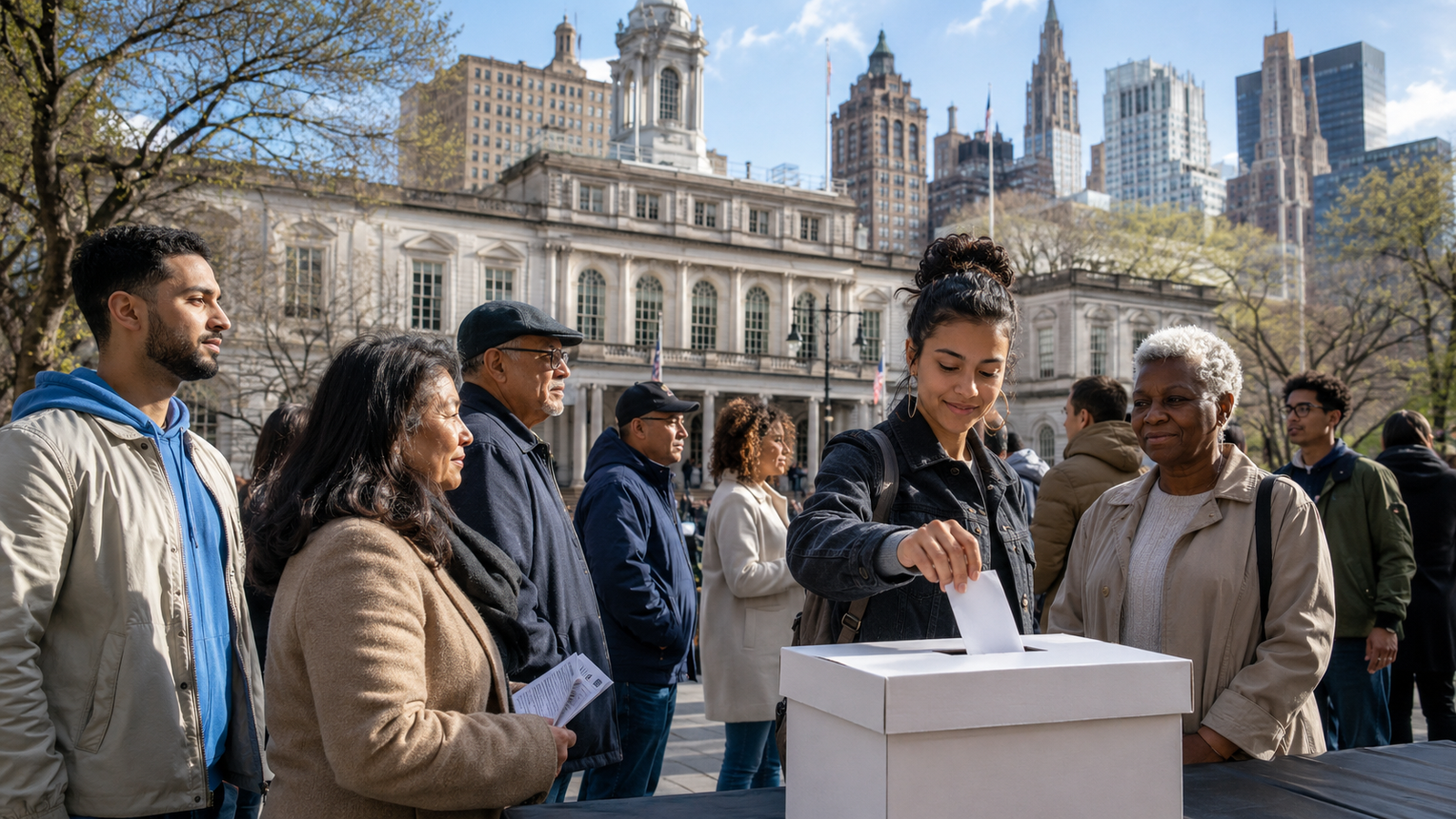
By Mutiu Olawuyi
A major election reform proposal could appear before New York City voters in the November 2026 general election, potentially changing how residents choose the mayor, public advocate, comptroller, borough presidents, and City Council members.
The New York City Charter Revision Commission has adopted an interim final report advancing a proposal to establish open primaries and nonpartisan general elections for local elected offices. Under the plan, all eligible candidates would compete in one open primary, all registered voters could participate regardless of political party, and the top two vote-getters would move on to the general election.
For Bronx voters, especially independents and residents who feel disconnected from party politics, the proposal could reshape access to local democracy.
According to the Commission’s report, more than 20 percent of registered New York City voters are independents, meaning they currently have no direct say in partisan primaries that often decide the outcome of local races in heavily Democratic districts. The report also states that about 80 percent of major U.S. cities with populations of 500,000 or more already use some form of open primary or nonpartisan election system.

The Commission said the proposal would allow candidates to continue identifying themselves by party affiliation on the ballot, if they choose. However, the election structure would no longer limit primary participation to voters registered with a political party.
A “Yes” vote would establish open primaries and nonpartisan general elections for mayor and other local offices. A “No” vote would keep the current system of partisan primaries and general elections among party nominees.
The debate is likely to raise serious questions across the city. Supporters may argue that open primaries would reduce voter exclusion, encourage broader participation, and give unaffiliated voters a meaningful role in elections that shape schools, housing, public safety, sanitation, transportation, and neighborhood investment.
Critics may question whether the change could weaken party identity, confuse voters, or reduce ideological diversity if only two candidates advance to the general election.
For the Bronx, the issue is not abstract.
Local elections often determine who speaks for communities facing housing pressure, public health disparities, school challenges, economic inequality, immigration concerns, and public safety demands. When many voters are shut out of the primary stage, the democratic process can feel distant from everyday community life.
The Commission’s interim final report also makes clear that its work is not finished. It will continue reviewing other possible Charter changes, including proposals related to antisemitism and hate crimes, affordable housing development, and restrictions on the ability of local elected officials to raise their salaries during an election cycle.
As public hearings continue, Bronx residents will have an opportunity to weigh in on whether the city’s election system should remain party-centered or move toward a model that gives every registered voter a voice from the first round.
The coming conversation will test more than election mechanics. It will ask whether New York City’s democracy is open enough, fair enough, and responsive enough to the people it serves.