Sheikh Musa Drammeh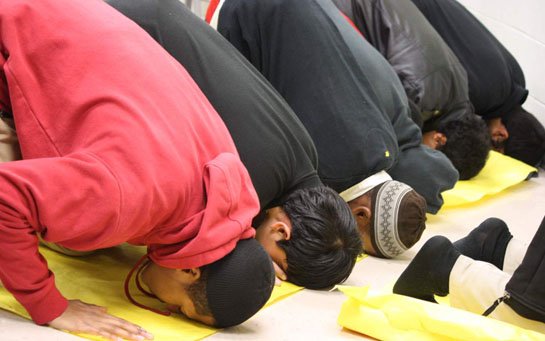
A Structured Juristic Response
In recent discussions, a claim has resurfaced suggesting that if a maʾmūm (follower) joins the congregational prayer while the imām is in sujūd, that participation should count as a complete rakʿah. At first glance, the argument appears appealing: one has participated in the unit; therefore, it should count. However, when examined through the lenses of Qur’ānic guidance, authenticated Sunnah, juristic continuity, and uṣūl al-fiqh methodology, this claim proves deeply problematic. The issue is not about rigid formalism; rather, it concerns the structural integrity of ritual law and the disciplined interpretation of textual evidence.
To begin with, the primary prophetic guidance governing late arrival to congregational prayer is found in the well-known narration, thus:

“When you come to the prayer, come with calmness and dignity; whatever you catch, pray, and whatever you miss, complete.”
(Ṣaḥīḥ al-Bukhārī 635; Ṣaḥīḥ Muslim 602)
This hadith establishes two foundational principles: first, that the latecomer must join the imām immediately in whatever posture he finds him; and second, that whatever portion of the prayer was not caught must be completed after the imām concludes. Notably, the hadith addresses participation and completion, but it does not define what constitutes catching a rakʿah. For that clarification, jurists have consistently relied on another prophetic statement:
“Whoever catches the rukūʿ has caught the rakʿah.”
(Sunan Abī Dāwūd 893; Jāmiʿ al-Tirmidhī 579)
Here, the Prophet ﷺ identifies rukūʿ—not sujūd—as the decisive threshold. Therefore, any interpretation that isolates the first hadith while disregarding the second creates a methodological imbalance. Sound juristic reasoning requires reconciliation of texts, not selective emphasis.
Moreover, beyond textual evidence lies the structural identity of the rakʿah itself. A rakʿah is not merely a sequence of movements; it is a structured unit composed of qiyām (standing with recitation where applicable), rukūʿ (bowing), and two sujūd (prostrations). Within this structure, rukūʿ functions as the pivotal transition between recitation and prostration. It completes the standing phase and marks the essential hinge of the unit. If rukūʿ is absent, the rakʿah is structurally incomplete. Sujūd, though indispensable, occurs after this hinge and cannot retroactively compensate for its omission.
This structural understanding is not speculative; it reflects uninterrupted juristic teaching across the four Sunni madhāhib—Ḥanafī, Mālikī, Shāfiʿī, and Ḥanbalī—as well as within the Jaʿfarī school. No recognized classical authority institutionalized the view that sujūd alone suffices. Such continuity across centuries constitutes more than inherited habit; it represents cumulative legal reasoning refined through textual analysis, companion practice, and methodological discipline.
Those who argue for counting sujūd sometimes appeal to simplicity, claiming that participation in any essential pillar should suffice. However, this reasoning collapses the hierarchical structure of the rakʿah. If sujūd alone were sufficient, one could theoretically miss qiyām, miss recitation, miss rukūʿ entirely, yet still claim the unit. Such a position reduces the rakʿah to its final posture, detaching it from its defining arc. Ritual law in Islam is not built on minimal overlap but on structural coherence.
From the perspective of uṣūl al-fiqh, the sujūd claim faces additional challenges. First, the rukūʿ hadith, even as a solitary report (khabar al-wāḥid), is fully operative within Sunni legal methodology, as all four schools accept authentic solitary reports in legal matters.
Rejecting its legal authority would require reconfiguring foundational hadith theory itself. Second, legal maxims further reinforce the rukūʿ threshold. The maxim “certainty is not removed by doubt” (al-yaqīn lā yazūlu bi-sh-shakk) dictates that if one is uncertain whether rukūʿ was caught before the imām rose, the rakʿah is not counted. Likewise, the principle that inability removes obligation explains why the latecomer who joins in rukūʿ is excused from reciting al-Fātiḥah—without redefining the rakʿah’s structure.
Equally important is the concept of operational consensus (ijmāʿ ʿamalī). While explicit statements of consensus may not always be recorded verbatim, the uninterrupted transmission of a ruling across centuries carries substantial methodological weight. No madhhab, no recognized juristic council, and no authoritative legal institution has adopted the sujūd-only position. To overturn such continuity requires overwhelming proof—not interpretive preference or rhetorical appeal.
Furthermore, the philosophical dimension of congregational prayer reinforces this conclusion. The communal act of rukūʿ represents a synchronized transition of humility, an embodied hinge between recitation and prostration. It is the moment that completes the standing engagement with revelation and ushers the congregation into prostration. To treat sujūd alone as sufficient fragments this ritual arc and undermines the integrated rhythm of communal worship.
Consequently, the confirmation point remains clear and consistent: if the latecomer reaches rukūʿ before the imām rises into iʿtidāl, the rakʿah counts. Once the imām has risen from rukūʿ, the rakʿah is missed. Joining in sujūd fulfills the obligation of immediate participation, but it does not count as catching the rakʿah.
Therefore, it is safe here to conclude that the claim that meeting the imām in sujūd constitutes a complete rakʿah is textually weak, structurally incoherent, methodologically fragile, and historically discontinuous. The rukūʿ threshold rests upon prophetic clarification, juristic continuity, ritual structure, and sound uṣūl principles. Islamic law is preserved not through isolated reinterpretations but through disciplined fidelity to its sources and methods. The rakʿah is defined by its hinge; and that hinge is rukūʿ, not sujūd.


 Newsroom