Sheikh Musa Drammeh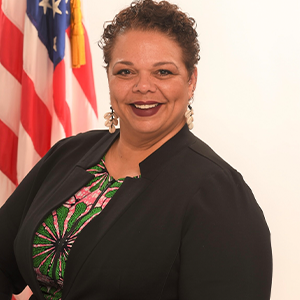
New York City, under the leadership of Mayor Zohran Kwame Mamdani, has named Rebecca Jones Gaston as the new commissioner of the Administration for Children’s Services, a leadership change that could carry major implications for families in the Bronx, where child welfare, foster care, youth justice, housing instability, and family support systems often intersect in urgent ways.
Jones Gaston arrives with a long background in child welfare leadership at the federal and state levels. City Hall said she most recently served as commissioner of the Administration on Children, Youth, and Families at the U.S. Department of Health and Human Services, and previously led child welfare systems in Maryland and Oregon. Her record, according to the city, includes reducing foster care placements, expanding prevention services, and strengthening family-centered approaches.
For Bronx communities, the appointment matters because ACS is not a distant bureaucracy. It is an agency whose decisions can shape whether families receive meaningful support early enough to stay together, whether children enter foster care unnecessarily, whether young people are treated with dignity, and whether struggling parents are helped or simply monitored.

In her statement, Jones Gaston said this is a moment to “move beyond managing crisis” and instead invest in prevention, trust, and stronger families. That language is likely to resonate in boroughs like the Bronx, where residents and advocates have long argued that families too often encounter government systems only after problems have already escalated.
The Bronx has for years been at the center of broader debates about poverty, housing pressure, family stress, educational inequality, and public health disparities. In such an environment, child welfare cannot be viewed narrowly. Many of the pressures that bring families into contact with ACS are rooted not only in safety concerns, but also in economic hardship, unstable housing, unmet mental health needs, lack of childcare, and limited access to preventive services. A prevention-focused commissioner, if backed by real resources and operational change, could therefore influence far more than agency culture.
That said, expectations will be high. Advocacy groups that welcomed the appointment also signaled the scale of the work ahead. The Legal Aid Society, for example, said ACS must safely reduce foster care involvement, prioritize preservation and reunification, and confront the disproportionate harm experienced by communities of color. Those concerns are especially relevant in the Bronx, where many families have long raised questions about fairness, trust, and how deeply systems intervene before offering support.
The central question now is whether this leadership change will translate into measurable outcomes for neighborhoods that need more than a new name at the top. Bronx families will be watching to see whether prevention services are expanded, whether frontline responses become more humane, whether families in crisis receive practical help sooner, and whether children are protected without unnecessarily tearing households apart.
If this appointment marks the start of a more responsive and family-centered era at ACS, the impact could be significant for the Bronx. But the borough will judge that promise not by press release language, but by whether the system becomes more just, more effective, and more worthy of public trust.