Sheikh Musa Drammeh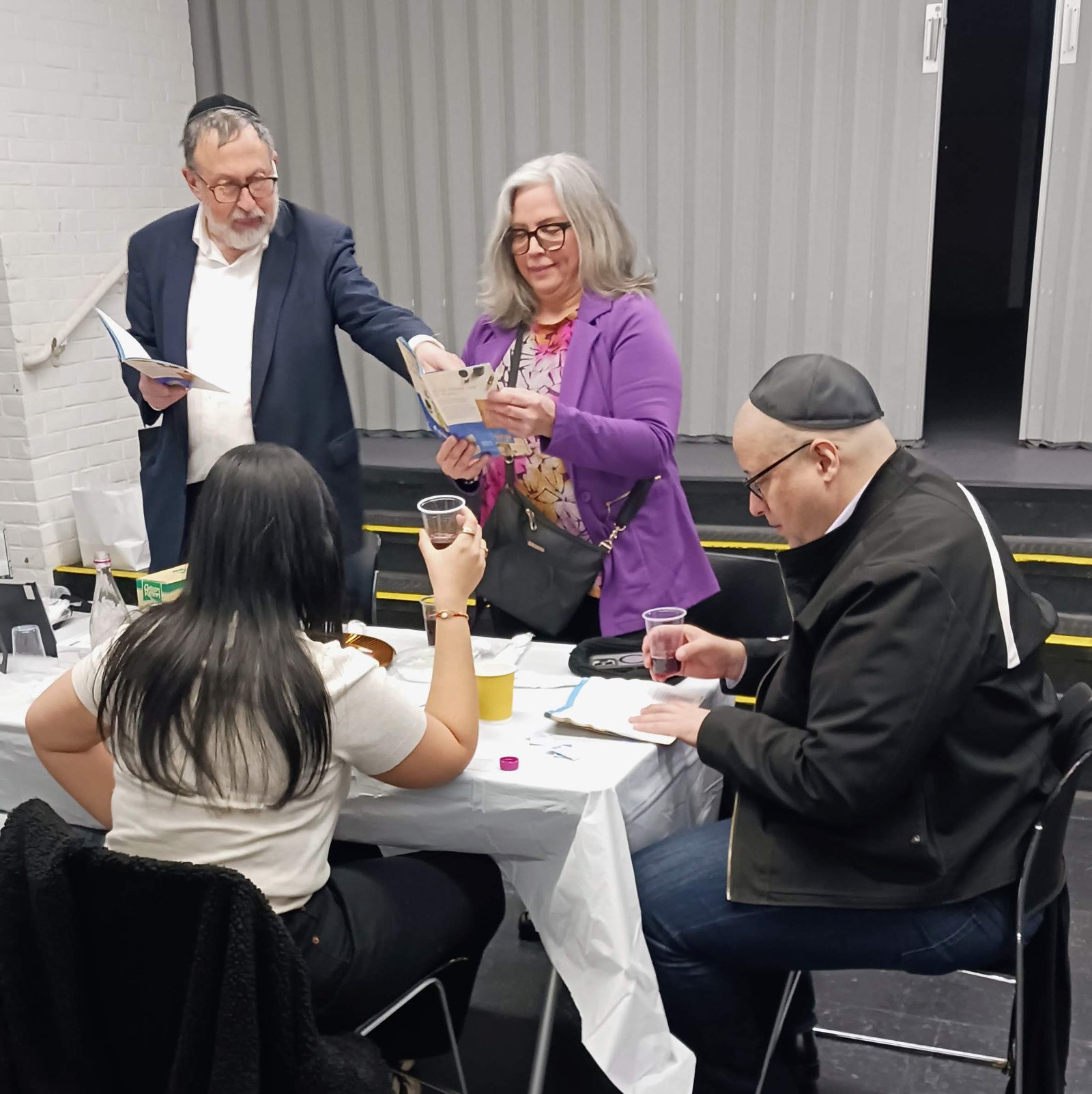
By Robert Press
Bronx House on Pelham Parkway South became a space of reflection, learning, and cultural connection on Sunday afternoon as community members gathered for a well-attended model Passover Seder led by Rabbi Moshe Fuchs of the Sons of Israel Synagogue.
The event offered attendees an opportunity to experience key elements of the Jewish Passover tradition in an inclusive and educational setting. Guests shared in symbolic foods central to the Seder, including matzoh, the unleavened bread that represents the urgency of the Israelites’ exodus from Egypt. Other traditional foods served included bitter herbs, matzoh ball soup, gefilte fish, pickles, and a main course, along with grape juice representing wine.

Beyond the meal itself, the gathering served as a living lesson in heritage and intergenerational community-building. Passover, one of the most meaningful observances in Jewish life, is rooted in themes of freedom, memory, resilience, and faith—values that resonate across cultures and communities in a borough as diverse as the Bronx.
Among those in attendance were State Senator Gustavo Rivera, who wore a yarmulke during the event, and Councilwoman Shirley Aldebol. Their presence underscored the importance of civic engagement in supporting local cultural and faith-based traditions.
Bronx House Chief Operating Officer Yamine Brown said events like the Seder highlight the importance of preserving tradition while creating shared spaces that bring people together in meaningful ways. That spirit was evident throughout the afternoon, as participants engaged not only with the food and rituals, but also with the stories and values behind them.
A particularly memorable moment came when Councilwoman Aldebol read from the Haggadah in English, offering a translation of a Hebrew passage recited by Rabbi Fuchs. The exchange added a thoughtful and accessible dimension to the ceremony, helping ensure that everyone in the room—regardless of background—could take part in the experience.
Located at 990 Pelham Parkway South, Bronx House continues to serve as a neighborhood anchor, offering programs for residents of all ages, from children to senior citizens. Events like Sunday’s model Seder show how local institutions can do more than provide services—they can also nurture belonging, cultural literacy, and community unity in a borough that thrives on diversity.
In a time when division often dominates public life, gatherings like this one offer a simple but powerful reminder: shared traditions, when opened with generosity and understanding, can help build stronger and more connected communities.