Bronx Post Newsroom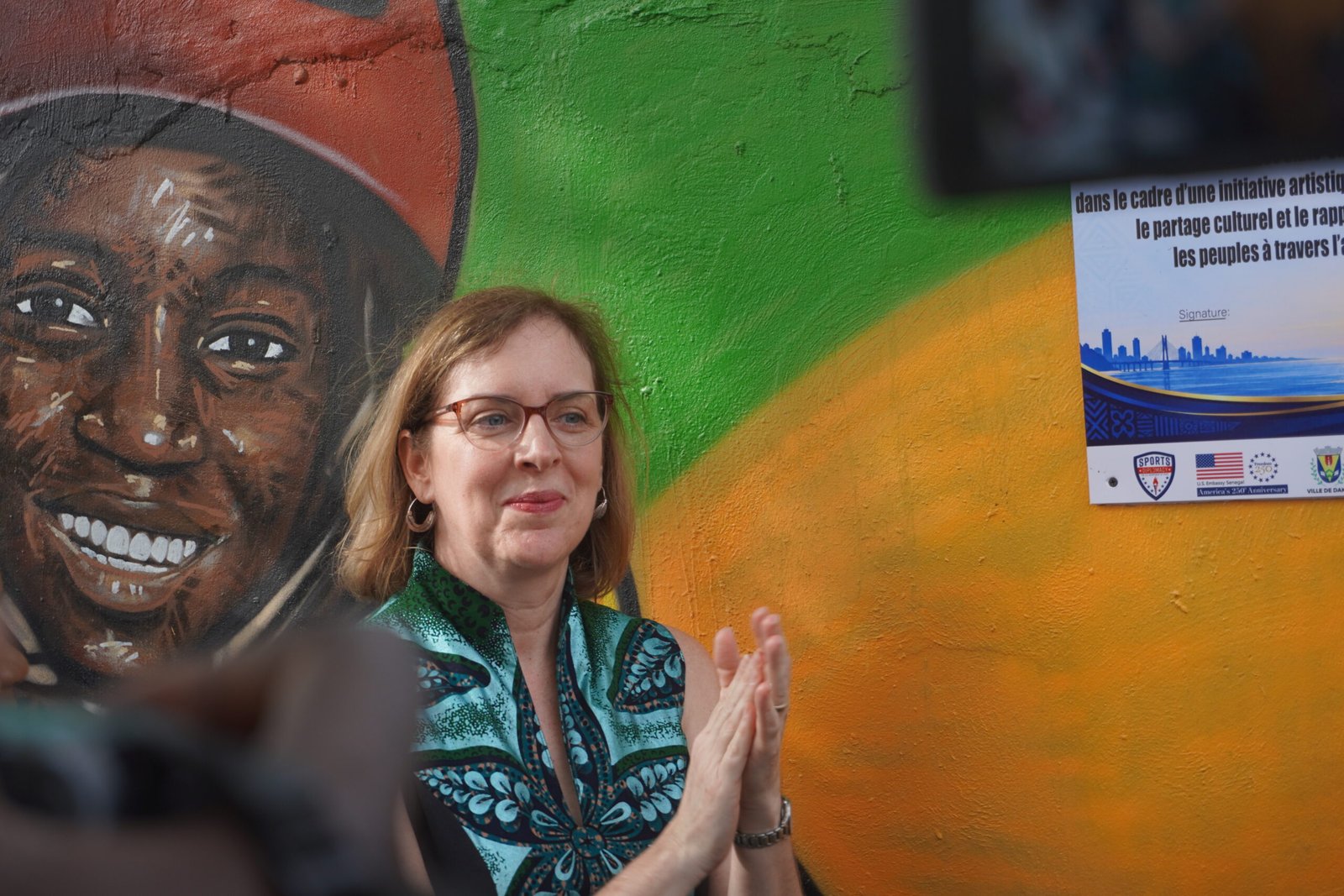
A borough with deep West African roots is watching two skateparks rise at once — one in Senegal, one blocks from Castle Hill.
By Mutiu Olawuyi


Two skateparks, an ocean apart, are rising on the same wave.
In Dakar’s Patte-d’Oie neighborhood, U.S. diplomats and Olympic athletes closed out a week of skateboarding clinics this month ahead of the 2026 Youth Olympic Games, the first Olympic event ever staged on African soil. Roughly 4,000 miles west, in the Bronx’s Soundview section, a $7 million, Tony Hawk-backed skatepark is taking shape a short walk from Castle Hill, one of New York City’s oldest Senegalese immigrant settlements. On paper, the two projects have nothing to do with each other. For the Bronx’s West African diaspora, they may be hard to see as separate.
A ceremony in Dakar, a diaspora watching from home
 At the closing ceremony in Dakar, Jennifer Davis Paguada, Chargé d’Affaires of the U.S. Embassy in Senegal, told a crowd of officials and young skaters that the week’s program, led by Dr. Neftalie Williams, the first U.S. Sports Ambassador for Skateboarding, and Olympic skateboarder Minna Stess, was meant to carry Senegalese athletes toward the Los Angeles 2028 Olympics, where skateboarding will again be a full medal sport. “Every skater knows that to progress in this sport, you must first try, then fall, get back up, and start again,” Paguada told the crowd, framing the week as a beginning rather than an ending.

For many in the Bronx, that message lands closer to home than it might elsewhere. New York has been a center of Senegalese settlement in the U.S. since the 1970s, and while Harlem’s “Little Senegal” is the community’s most visible face, researchers have long documented a separate, less concentrated Senegalese presence in the Bronx, including a Wolof-speaking community centered in Castle Hill. The U.S. Census counted just over 18,000 Senegalese Americans nationwide as of 2019, with New York among the largest hubs; after years of continued migration since, the true number today is almost certainly higher.
A skatepark rising in Castle Hill’s backyard

 Soundview sits beside Castle Hill in City Council District 18, and it’s there that New York City, working with skateboarding legend Tony Hawk’s nonprofit, The Skatepark Project, is building a 15,000-square-foot skatepark to replace a long-shuttered roller rink. It’s one of four skateparks the group is helping the city build in the Bronx and Brooklyn, part of a roughly $24 million initiative Mayor Eric Adams announced in his 2024 State of the City address, aimed, he said, at giving New Yorkers, young people especially, “a place to get outside, have fun, and express themselves on four wheels.”
The Soundview park is being co-designed with input from Tyshawn Jones, a two-time Thrasher Skater of the Year — skateboarding’s most prestigious individual honor — who grew up in Soundview and became the first skater from the Bronx to win the award when he first took it in 2018. Jones has spent years pushing city officials to bring real skating infrastructure to his neighborhood. “It’s good to get something in the community now,” he told reporters at a 2024 community design session, after years of having to travel to other boroughs just to skate. Neighbors at that session said they wanted the finished park to feel like it belonged to Soundview, not like a copy of what already exists elsewhere in the city. As of last fall, the project was still moving through community review and engineering design with Bronx Community Board 9; city officials have said they hope to complete all four boroughs’ new skateparks by 2027 — the same runway Senegal’s own skaters are now being told to train on.
Two fronts, one opportunity
 Nothing formally connects Patte-d’Oie to Soundview. But for a Bronx-raised child of Senegalese, Gambian or other West African immigrant parents, the timing points in the same direction from two sides of the Atlantic at once: a sport their family’s homeland is now investing in as a matter of national pride is, at the same moment, getting serious public investment a few blocks from home.
That is not a small thing in a borough where skateboarding has for years lacked dedicated, legal space, leaving young skaters riding sidewalks and parking lots rather than parks built for them. It is a short distance, too, from what Dr. Williams told the young skaters he coached in Dakar: that no one should need to fear stepping onto a board, because what the sport offers, wherever it is practiced, is a sense of freedom everyone deserves the time and space to feel.
For Bronx families with roots on both sides of the Atlantic, that space is now opening on two continents at once.

 Bronx Post Reporter 1