Bronx Post Newsroom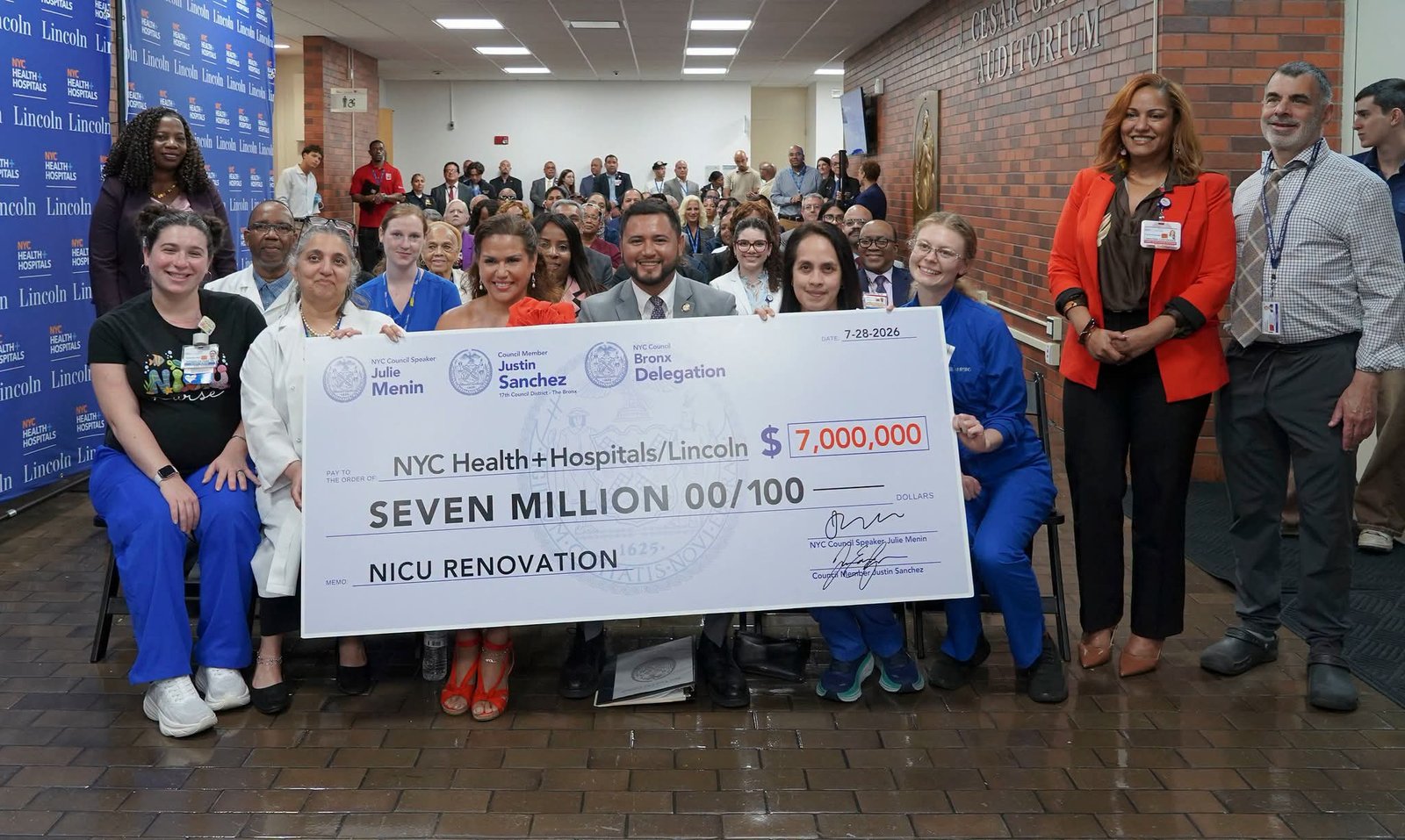
By Mutiu Olawuyi
The Bronx is set to receive a major investment in newborn care after City Council Speaker Julie Menin and Council Member Justin Sanchez announced $7 million in capital funding for a new Neonatal Intensive Care Unit at NYC Health + Hospitals/Lincoln.
The funding comes as the Bronx continues to face the highest rate of preterm births in New York City, with nearly 1,800 babies born early in 2024 alone. For families, doctors, nurses and public health advocates, the investment speaks directly to one of the borough’s most urgent maternal and infant health challenges.
Preterm babies often require specialized medical attention in their first days and weeks of life. A stronger NICU at Lincoln Hospital will mean better equipment, improved care capacity and a stronger safety net for some of the borough’s most vulnerable newborns.
For Bronx families, this is more than a hospital upgrade. It is a statement that babies born early in the Bronx deserve the same chance at survival, stability and healthy development as babies born anywhere else in the city.

Lincoln Hospital, located in the South Bronx, serves many working-class families, immigrant households and communities that have long faced unequal access to healthcare resources. Strengthening its neonatal services can help reduce pressure on families who might otherwise need to travel farther for specialized care during one of the most frightening moments of parenthood.
Speaker Menin and Council Member Sanchez framed the investment as part of a broader commitment to improving health outcomes in underserved communities. The funding is expected to support a new NICU with better equipment and stronger clinical capacity for the hospital’s smallest patients.
The Bronx’s preterm birth crisis is not only a medical issue. It is also connected to deeper conditions affecting maternal health, including poverty, housing instability, stress, chronic illness, environmental burdens, access to prenatal care and racial health disparities. A new NICU can save lives after early birth, but long-term progress will also require stronger prenatal care, maternal health education, nutrition support, mental health services and community-based prevention.
That is the broader opportunity before the city: invest not only in emergency care for fragile newborns, but also in the conditions that help mothers carry pregnancies safely to term.
Still, the $7 million investment is an important step. It recognizes that the Bronx cannot be asked to carry the city’s highest preterm birth burden without the medical infrastructure needed to respond.
For parents whose babies arrive too soon, every minute, every monitor, every incubator and every trained professional matters. A modernized NICU at Lincoln Hospital could make the difference between fear and hope, crisis and recovery, loss and life.
As the project moves forward, Bronx residents will be watching for clear timelines, transparent implementation and continued investment in maternal and infant health across the borough.
The message is simple: protecting Bronx babies must begin before birth, continue at delivery and remain strong in the critical days that follow.