Bronx Post Newsroom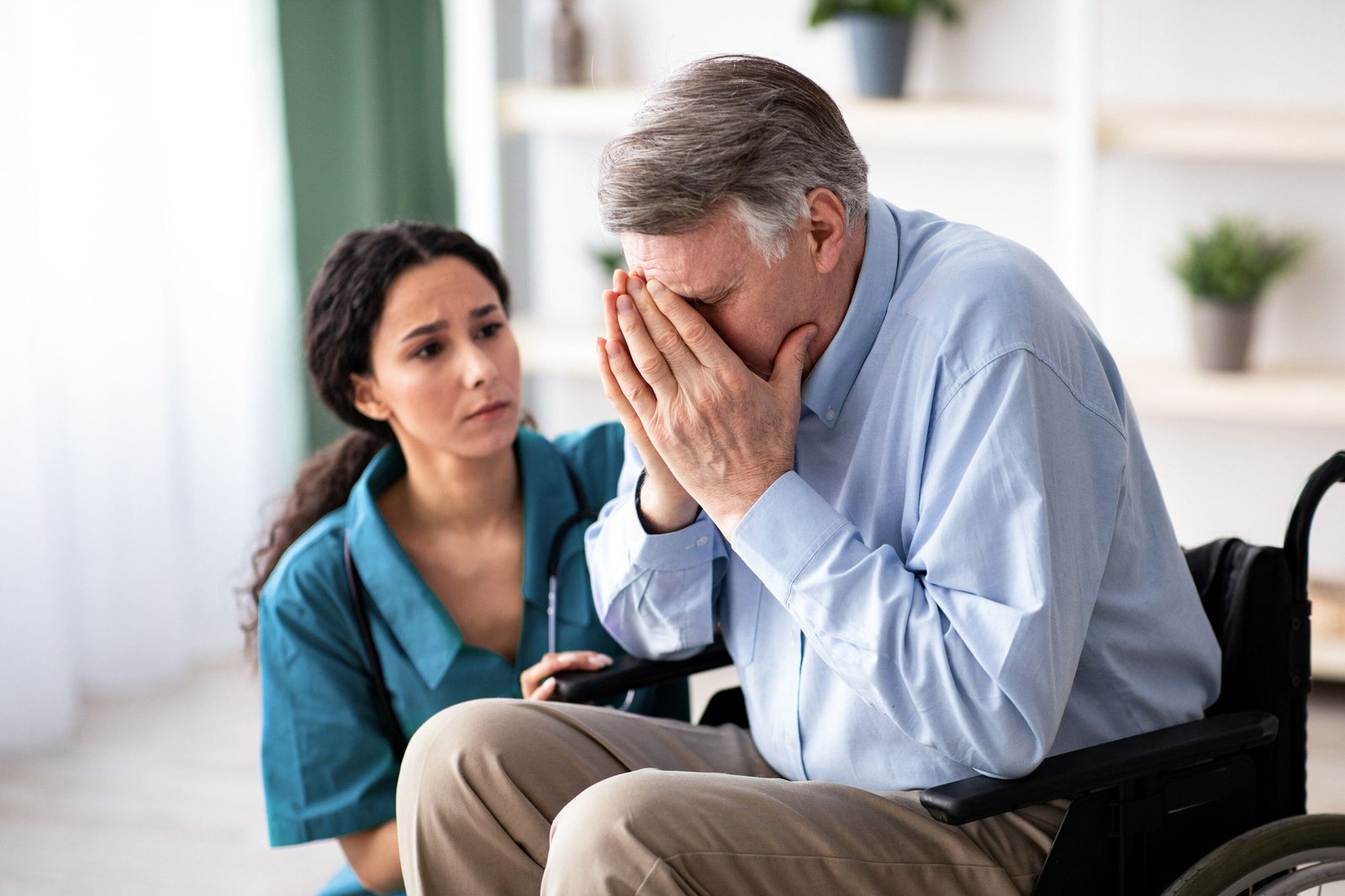
By Lawrence Seiler
Bronx Post / Abled and On Air
Caregiving is love in action. But anyone who has truly lived it knows that love alone does not remove the exhaustion, confusion, fear and pressure that come with caring for someone through a serious medical crisis.
I am writing to share personal reflections and professional insights on caregiving, mental health and the importance of advocacy.
I am not a licensed social worker, and I do not pretend to be one. I respect trained professionals deeply. Their work matters. But I am a journalist of more than 30 years, a disability advocate, and most importantly, a husband who had to learn caregiving in the most painful way possible.
When my wife underwent her amputation, I experienced caregiver burnout firsthand. I spent nearly 10 hours a day, seven days a week at the hospital while also balancing my work with Parrot TV. I was physically present, emotionally overwhelmed, professionally stretched and spiritually tested.
There were days I felt strong. There were days I felt broken. There were days I questioned whether I was doing enough, asking enough, understanding enough or resting enough.
That is the truth many caregivers live with quietly.
Caregiver burnout is real. It can affect the body, the mind, the finances and the spirit. The Centers for Disease Control and Prevention has warned that caregiving can create physical, emotional and financial strain. That is not weakness. That is reality.
What helped me was learning that caregiving requires more than sacrifice. It requires structure.
Caregivers must manage medications carefully. They must ask doctors direct questions. They must keep notes. They must follow up. They must advocate clearly. They must also make time to rest, eat properly, sleep when possible and take mental health breaks.
That last part is important.
Many caregivers feel guilty for resting. They feel that stepping away means abandoning the person they love. But that is not true. If you collapse, who will continue the work? If you ignore your own health, how long can you remain useful to the person depending on you?
My colleagues at Parrot TV often remind me that health matters in small daily choices too. Do not overeat until you feel sluggish. Do not ignore stress until it becomes sickness. Do not pretend you are fine when your body is asking for a pause.
Mental health breaks are not luxuries. They are survival tools.
As a journalist, I have learned to listen, ask questions and challenge systems. As a caregiver, I learned that those same skills are needed in hospitals, rehabilitation centers, public agencies and insurance systems.
But there is another difficult truth: in the United States, disability support can be confusing because benefits and policies do not work the same way everywhere.
Some disability benefits, such as Social Security Disability Insurance and Supplemental Security Income, are federal programs. But many supports that people with disabilities and caregivers depend on — including Medicaid services, home care, transportation assistance, personal care support, housing help and caregiver programs — can vary from state to state.
A disabled person in New York may not have the same access, process, waiting period or support structure as someone in Florida, Texas, California or another state. Medicaid waivers, caregiver supports, disability services and local assistance programs often depend on where you live.
That can be overwhelming for families already dealing with pain, medical bills and emotional stress.
In some countries, disability policy is more centralized at the national level. Israel, for example, operates major disability benefits through its National Insurance Institute, creating a more nationally unified structure for disability claims and support. The United States has national disability programs too, but because it is a federal system, many practical services are shaped by state rules and local implementation.
That means American families must often become investigators while they are already serving as caregivers.
They must ask: What does my state cover? What does Medicaid provide here? Are there home care options? Is transportation assistance available? Are there caregiver respite programs? Are there disability rights organizations nearby? Can a social worker, advocate or nonprofit help us understand the system?
This is why I encourage viewers of Abled and On Air and readers of Bronx Post to seek help early. Do not wait until you are exhausted. Do not wait until paperwork becomes impossible. Do not wait until a crisis forces you to learn the system overnight.
Speak with professionals when you can. Listen to doctors. Ask for social workers. Contact disability organizations. Search official public health resources. Talk to advocates. Talk to people who have walked the road before you.
And yes, listen to your heart — but do not let negative outside voices silence your lived experience.
Professional training matters. Personal experience matters too. The best support system respects both.
For more resources on caregiver stress, visit the CDC website. For more conversations on disability, caregiving and advocacy, watch Abled and On Air on Parrot TV.
Caregiving is hard. Advocacy is hard. Disability systems can be hard.
But no caregiver should have to feel alone, ashamed or powerless.
Take the break. Ask the question. Find the resource. Protect your health. Fight for your loved one — but do not forget to care for yourself along the way.
——————————————–
Edited by Mutiu Olawuyi