Bronx Post Newsroom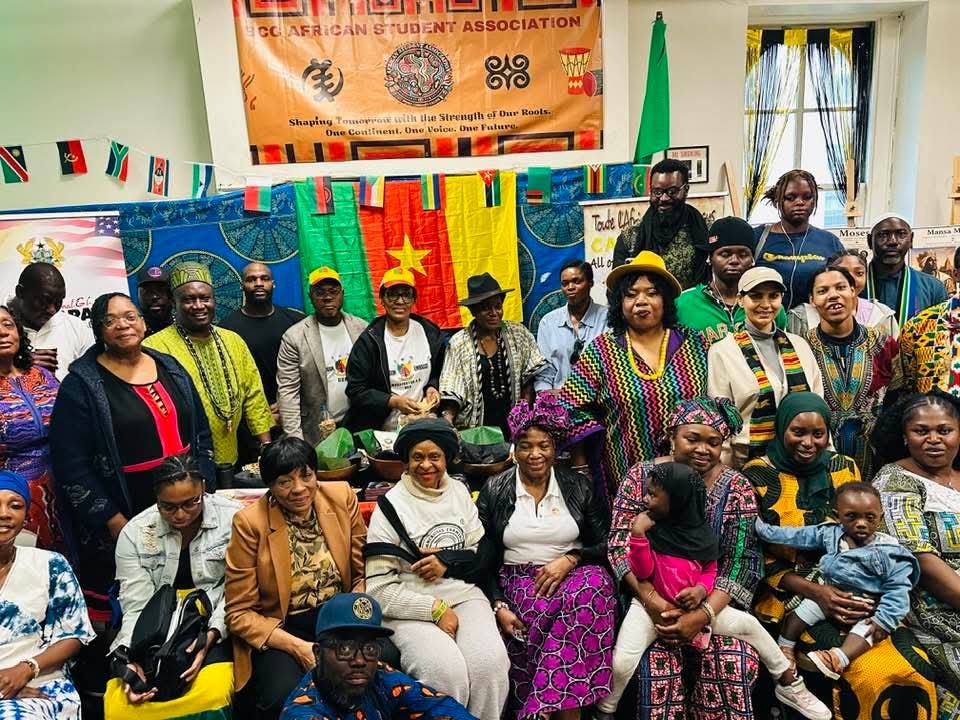
By Mutiu Olawuyi
The Bronx became a living center of African memory, culture, and diaspora unity on Saturday, May 23, 2026, as Daylight Africa, in collaboration with the African Union Day
Foundation and the Museum of Africa Committee, hosted a historic Africa Day Celebration in New York City at Bronx Community College.
Held under the theme “Preserving African Legacies: Honoring Our Ancestors, Empowering Our Future,” the event brought together African, Caribbean, and African diasporan community leaders, students, families, cultural advocates, educators, and friends of Africa for a vibrant celebration of African identity and heritage.
The event was especially significant because it featured the maiden public exhibition of the Museum of Africa in New York, a cultural and educational initiative designed to preserve African history, honor ancestral legacy, and promote a more dignified understanding of Africa’s contribution to human civilization.


Community leaders and attendees with roots in Liberia, Sierra Leone, Ghana, Guyana, Guinea, Jamaica, Nigeria, Senegal, The Gambia, and other parts of the African world were present. The gathering reflected the diversity of the African family across the continent, the Caribbean, and the wider diaspora.
Among those who witnessed the historic celebration were official staff from Cameroon Embassy, BCC Pan-African American staff Eugene Adams, Hon. Famod Konneh, Commissioner Aicha Cissé, cultural personality Katherine Kojo, popularly known as Keymama, Vladimir Charles, Prince Adeyemi, Sidiki Donzo, President of the African Advisory Council at the Bronx Borough President’s Office, Nutritionist (Dr.) Gloria Bent, members of the African Advisory Council, and many other community stakeholders.
African students of Bronx Community College were also in attendance, adding youthful energy and educational relevance to the celebration. Their presence strengthened one of the core messages of the event: African heritage must not only be remembered by elders, but also transmitted to the younger generation as a source of pride, knowledge, and responsibility.
The celebration featured cultural music, dance, fashion, discussions, vendors, food, family activities, and the Museum of Africa exhibition. Together, these activities created an atmosphere that was both festive and reflective, allowing participants to celebrate Africa while also engaging the deeper meaning of cultural preservation.
For many attendees, the event was more than a community gathering. It was a statement of identity. It affirmed that Africans and people of African descent in New York remain connected by history, culture, struggle, resilience, and shared aspirations for the future.

Sheikh Musa Drammeh, Chairman of Daylight Africa and principal organizer of the event, expressed appreciation to all dignitaries, community leaders, students, volunteers, partners, performers, vendors, and families who supported the celebration.
Drammeh said the successful hosting of the Africa Day Celebration and the maiden Museum of Africa exhibition in the Bronx showed what is possible when African communities unite around heritage, education, and institution-building.
According to him, the Museum of Africa is not only about displaying artifacts or historical figures. It is about correcting distorted narratives, restoring pride, and creating a permanent platform where African children and diaspora families can learn about Africa beyond the narrow images of poverty, conflict, slavery, and colonial wounds.
“This is a historic beginning,” Drammeh said. “The Museum of Africa exhibition in New York, particularly here in the Bronx, is a call to remember who we are, where we come from, and what we must build for the next generation.”
He noted that the Bronx was a meaningful location for the exhibition because of its large African, Caribbean, African American, and immigrant communities. The borough, he explained, represents both the pain and promise of the African diaspora — a place where people from different nations and backgrounds continue to build lives, raise families, create culture, and contribute to the civic and economic strength of New York City.
Drammeh also emphasized that preserving African legacies must go beyond annual celebration. He said it must become a sustained educational mission involving schools, families, community organizations, faith institutions, universities, media platforms, and public leaders.

“The future of our children depends on the stories we give them,” he added. “If they only inherit broken stories, they may struggle to see their greatness. But when they see Africa through history, leadership, civilization, creativity, resilience, and dignity, they begin to understand that they come from greatness and must contribute greatness.”
The maiden Museum of Africa exhibition helped advance that mission by presenting African history and identity in a public, accessible, and community-centered space. It offered visitors an opportunity to reflect on Africa’s past while imagining a stronger cultural future for African-descended communities in New York and beyond.
The presence of leaders from different African and Caribbean backgrounds also gave the celebration a restorative meaning. While colonialism, slavery, migration, and political boundaries have separated African people in many ways, the event demonstrated that shared memory and cultural purpose can bring communities back into meaningful connection.
For African students at Bronx Community College, the event provided an educational experience outside the classroom. It allowed them to see African heritage not merely as academic content, but as a living identity expressed through leadership, art, storytelling, music, public service, and community organization.


For elders and community leaders, it was a reminder that cultural preservation requires deliberate work. Heritage can fade when it is not organized, documented, funded, taught, and celebrated. The Museum of Africa initiative seeks to respond to that concern by creating a platform where African legacy can be preserved with dignity and shared across generations.
The Africa Day Celebration also sent a strong message about the role of the diaspora in shaping Africa’s global image.
Too often, African narratives are produced by others, filtered through crisis, and consumed without context. Events like this offer African communities the opportunity to tell their own stories, define their own heritage, and celebrate their own heroes.
In that sense, the Bronx celebration was not only cultural. It was also corrective. It challenged negative stereotypes and replaced them with images of unity, resilience, creativity, leadership, and hope.
As the program unfolded, the message became clear: Africa Day in New York must not be reduced to entertainment alone. It should also be a platform for education, youth empowerment, cultural diplomacy, historical restoration, and institutional development.
With the maiden Museum of Africa exhibition now introduced to the public, Daylight Africa and its partners have opened a new chapter in the effort to make African heritage more visible in New York City. The challenge ahead will be to sustain the momentum, expand partnerships, attract resources, and move the Museum of Africa vision from exhibition to lasting institution.

For the African and Caribbean communities of the Bronx, the event offered a powerful reminder that culture is not only what people inherit. It is also what they protect, practice, and pass on.
On May 23, at Bronx Community College, that responsibility was embraced with pride.
And through Daylight Africa’s historic celebration, the Bronx stood as a meeting place for memory, identity, unity, and the future of African people everywhere.