Bronx Post Newsroom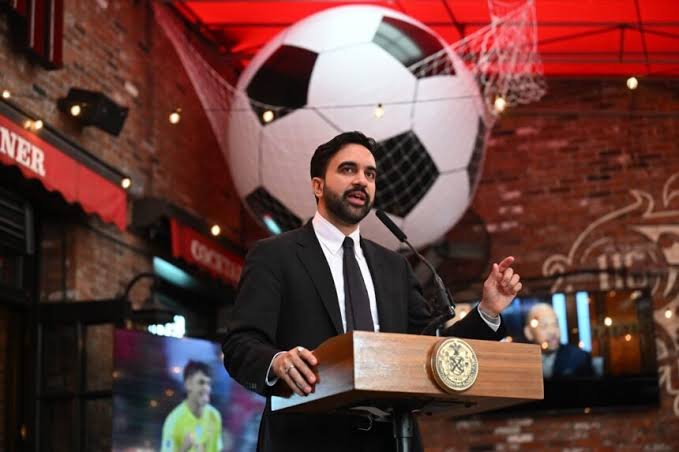
The 1,000 discounted tickets will be reserved for New York City residents, shared evenly across the five boroughs, and paired with free round-trip transportation to MetLife Stadium.
By Mutiu Olawuyi
New York City residents will have a rare opportunity to attend the 2026 FIFA World Cup at a sharply reduced price after Mayor Zohran Mamdani announced a 1,000-ticket affordability initiative designed to prevent working families from being completely priced out of the global tournament.
Under the plan, the tickets will be sold for $50 each and distributed through a ballot system open to New York City residents. The tickets are expected to be divided evenly across the five boroughs, giving Bronx residents the same chance as residents of Manhattan, Brooklyn, Queens, and Staten Island. The ballot is scheduled to open May 25 and close May 30.
The initiative covers selected 2026 World Cup matches at MetLife Stadium in East Rutherford, New Jersey, excluding the final. Reports indicate that the discounted allocation will apply to five group-stage matches and two knockout-round games, with approximately 150 low-cost seats made available per match.
For many Bronx families, the most significant part of the plan may not be only the $50 ticket price, but the inclusion of free round-trip bus transportation. Transportation has become a major concern for fans, especially as costs connected to accessing MetLife Stadium have drawn criticism. The tickets will reportedly be non-transferable and distributed at the bus boarding site on game day to reduce scalping and resale abuse.
The announcement comes amid widespread backlash over World Cup ticket prices, with many fans and public officials arguing that the tournament risks becoming inaccessible to the very communities that helped make soccer a global people’s sport. Reuters reported that average prices for some group-stage matches have reached hundreds of dollars, while premium tickets for the final have been listed at extremely high resale prices.

For the Bronx, where soccer is deeply rooted in immigrant, African, Caribbean, Latino, Muslim, and working-class communities, the affordability question is more than a sports issue. It is a civic equity issue. The World Cup is not just a luxury entertainment event; it is a cultural gathering that reflects the identities of many New Yorkers whose families carry the game across generations.

Mayor Mamdani has framed the ticket initiative as part of a broader effort to make the World Cup accessible beyond corporate suites and premium buyers. City officials have also announced complementary programs, including free and low-cost World Cup-related events across the five boroughs, a digital events map, and a “NYC Neighborhood Passport” intended to drive visitors and residents into local neighborhoods and small businesses during the tournament.
This 1,000-ticket program is limited compared with the scale of demand. MetLife Stadium holds tens of thousands of spectators, and New York City has more than eight million residents. For Bronx advocates, the next question will be whether this initiative becomes a symbolic gesture or the beginning of a wider affordability model for major sporting and cultural events hosted in the region.
Restoratively, this ticket controversy requires more than criticism of FIFA, city officials, or market pricing. It requires practical safeguards: transparent lottery rules, verified borough distribution, accessible registration, multilingual outreach, protection against resale exploitation, and a clear plan to ensure that low-income residents actually know how to apply.
The World Cup will bring global attention, tourism, and economic opportunity to the New York-New Jersey region. But for the Bronx and other working-class communities, the deeper measure of success will be whether local residents are treated as participants in the celebration, not merely spectators outside the gates.